EGN Norge
Five questions for the futurist: Henrik Larsson Broman answers on supertrends and leadership report. Henrik Larsson Broman is a futurist, researcher, speaker, trend analyst, sales expert, and author of the book «Supertrends.» For over 20 years, he has conducted numerous research projects and trend analyses to better understand how companies should navigate into the future…
The post AI and sustainability: Futurist helps navigate in times of change appeared first on EGN Norge.
]]>EGN Norge
Five questions for the futurist: Henrik Larsson Broman answers on supertrends and leadership report.
Henrik Larsson Broman is a futurist, researcher, speaker, trend analyst, sales expert, and author of the book «Supertrends.» For over 20 years, he has conducted numerous research projects and trend analyses to better understand how companies should navigate into the future and become competitive in an ever-changing environment. He has delivered over 1400 lectures in Sweden and internationally, and soon he will guest the EGN live webinar studio, to enlighten us on what is to come in the future. Before the webinar, to awaken our appetite, we asked him five questions on futurism. Read his answers right here.
1: What inspired you to become a futurist and focus on helping leaders navigate uncertainty and change?
Inventor Charles Kettering famously said, “I am interested in the future because I am going to spend the rest of my life there.” This sentiment deeply resonates with me. Like many, I’ve always been fascinated by the future—its possibilities, challenges, and the power we have to shape it. My own journey began at Kairos Future, a trend and future analysis company, where I led multiple projects exploring the future of sales. The deeper I delved, the more captivated I became. But my passion for understanding and analysing patterns, connections, and change is also part of who I am. For me, it’s not just about predicting what’s next—it’s about empowering others to actively create the future they want to see.
2: In your book “Supertrends,” you discuss navigating an ever-changing environment. Can you share one key trend from the EGN Leadership Report 2025 that leaders should prioritize?
From a business perspective, the adoption of AI stands out as the defining trend. The next few years will distinguish winners from those left behind. Organizations that experiment, adapt, and embrace AI as a tool to enhance their operations will thrive, while those hesitant to act will struggle. However, from a human perspective, sustainability is just as critical. Humanity faces immense environmental challenges, and the time to act is now. Businesses have both the responsibility and opportunity to drive innovation that benefits the planet while unlocking economic value. By addressing these dual imperatives, leaders can create a future that balances progress with preservation.
3: Leaders often feel overwhelmed by daily demands. What is your advice for leaders who struggle to find time to think strategically about the future?
The key is prioritization. Carve out time for reflection and strategic thinking—it’s not a luxury; it’s essential. Many believe constant action equals efficiency, but true effectiveness comes from deeply understanding what and why before jumping into execution. Research has shown that someone working 70 hours a week doesn’t necessarily achieve more than someone working 55 hours—if they focus on the right things. Leave space in your calendar for rest and reflection, even if it feels counterintuitive. This approach was popularized by Bill Gates, who, as early as the 1980s, implemented “Think Weeks” to focus on deep thinking, innovation, and learning. When we create time for thoughtful planning, we unlock better outcomes.
4: What roles do resilience, adaptability, and vision play in modern leadership, and how can leaders cultivate these qualities in themselves and their teams?
They are crucial. Resilience enables leaders to navigate challenges, maintain composure under pressure, and inspire confidence in their teams during turbulent times. It is about staying focused and resourceful, even in the face of setbacks. Adaptability, on the other
hand, involves fostering curiosity, staying open to new ideas, and having the ability to unlearn outdated approaches. In my lectures I often say: «The most important skill of the future is the skill to learn new skills (and unlearn old skills).» I believe this is true.
Vision, meanwhile, provides direction and purpose by answering the critical questions, “Where are we going?” and “Why are we going there?” In an increasingly uncertain and complex world, a clear vision not only guides decision-making but also instils a sense of meaning and focus within teams.
5: If attendees take away just one insight or tool from your webinar, what do you hope it will be, and why?
If there’s one message, I want attendees to leave with, it’s this: Don’t fear the future—embrace it! The world around us is undoubtedly complex and sometimes daunting, but by understanding trends and the forces shaping our world, we can gain the clarity and confidence needed to thrive. Rather than being overwhelmed, we can turn uncertainty into opportunity. With the right mindset and tools, the future doesn’t have to be something to fear—it can be a space to create, innovate, and grow. This perspective not only calms anxieties but also empowers individuals and organizations to lead with optimism and purpose.
Learn more at the webinar
On February fifth Henrik Larsson Broman guests the EGN global live webinar. Here he will dive further into the new leadership report and the interesting findings within. The event is for EGN members only. Read more about our peer groups here.
The post AI and sustainability: Futurist helps navigate in times of change appeared first on EGN Norge.
]]>EGN Norge
– Det beste med å være medlem I egn er at jeg holder meg oppdatert og kan snakke fritt med andre som har samme utfordringer I jobben. Det sier Nina Mathisen, som er purchasing director i Tomra Systems ASA. Hun har vært medlem av EGNs kompetansenettverk for ledere innen innkjøp og supply chain i hele…
The post Feirer 10 årsjubileum i EGN Norge appeared first on EGN Norge.
]]>EGN Norge
– Det beste med å være medlem I egn er at jeg holder meg oppdatert og kan snakke fritt med andre som har samme utfordringer I jobben.
Det sier Nina Mathisen, som er purchasing director i Tomra Systems ASA. Hun har vært medlem av EGNs kompetansenettverk for ledere innen innkjøp og supply chain i hele 10 år.
– Så mye har forandret seg gjennom disse årene. Jeg har jobbet i samme selskap hele tiden, men jobben min og ansvaret har utviklet seg – og jeg med den. Det er allti spennende å møte andre i ignende stillinger og diskutere faglige utfordringer på tvers av selskaper. Det gir meg nytt perspektiv som jeg tar med meg inn i jobbhverdagen når det blir krevende, sier Mathisen.
Medlem i 10 år
Nina Mathisen er det medlemmet som har vært med lengst i kompetansenettverket for ledere innen innkjøp og supply chain, og ble hedret for sin trofaste innsats på sesongavslutningen for kompetansenettverket. Møtet ble holdt hos ICE i Nydalen, og hovedtemaet var: Hvorfor og hvordan bygge informasjonssikkerhet, med fokus på Harvard-modulen Digital Intelligence.
Unike relasjoner
– Hva har vært det beste med å være med i EGN alle disse årene?
– Uten tvil menneskene, alle de gode diskusjonene og å utveksle erfaringer, sier Nina Mathisen.
Hun trekker frem Åpenhetsloven, risiko i verdikjede og bærekraft som noen av de mest givende temaene som har vært grundig belyst i kompetansenettverket for innkjøp og supply chain det siste året.
For Nina Mathisen er det like viktig med både bredde og dybde i kompetansenettverket.
– Jeg vil diskutere med likesinnede, men det er viktig at vi hele tiden fornyer oss, sier Mathisen.
– Det er inspirerende for meg at det jevnlig kommer nye medlemmer inn i gruppen, samtidig som det er en hard kjerne som har vært medlemmer i mange år. Det er slik jeg holder meg oppdatert, både personlig og profesjonelt. sier Nina Mathisen.
Deler raust
– Nina Mathisen er kroneksempelet på en leder som gir mye tilbake til de andre i gruppen, som både utfordrer, men også deler raust og er åpen for å dele sine erfaringer med nye medlemmer, sier Inger Adele Myklebust, som er nettverksleder for innkjøp og supply chain i EGN, hvor det det også er medlemmer fra blant annet Ekornes, Lyse, Avinor og Bama.
På bildet (fra venstre): Nettverksleder Inger Adele Myklebust, Nina Mathisen, purchasing director i Tomra Systems ASA og Ine Thereze Gransæter, CEO i EGN Norge.
The post Feirer 10 årsjubileum i EGN Norge appeared first on EGN Norge.
]]>EGN Norge
But companies rushing into the open global market need to be aware of the risks, says thought leader Steven McGinnes. Journalist, Philip Nordentoft “The technology was already here, but it wasn´t until the Covid pandemic hit, we realized the full potential of global interaction. But”, as Steven Mcginnes underlines, “even though the world suddenly seems…
The post Globalization and technology enable unprecedented international business opportunities, appeared first on EGN Norge.
]]>EGN Norge
But companies rushing into the open global market need to be aware of the risks, says thought leader Steven McGinnes.
Journalist, Philip Nordentoft
“The technology was already here, but it wasn´t until the Covid pandemic hit, we realized the full potential of global interaction. But”, as Steven Mcginnes underlines, “even though the world suddenly seems connected and aligned, there are still deep cultural differences across the planet”.
Steven Mcginnes is a writer, thought leader and business and brand veteran. For more than 20 years he has been working with the world’s biggest brands and time leading multi-million-dollar businesses, giving him the expertise to write the book “Surfing the Asian Wave”. The expansion of global interaction during the Covid pandemic has really impressed him:
“15 years of expected macro communication and social shifts happened in 2021. We are witnessing an instantaneous global engagement,” he says.
And while that might sound like an opportunity to many companies, naively neglecting deep cultural differences can make for awkward moments and potential dealbreakers.
The data supports this;,
80% of CEOs believe their future growth should be outside of their home market. 71% want to have more people on the ground in new markets and 79% want more cross-cultural teams.
But 74% feel that a lack of cross-cultural understanding will hold them back.
And that concern is well-founded, 60% of international business merger failures are attributed to cultural misunderstanding.
Made all the mistakes
Steven Mcginnes specializes in helping businesses, brands and individuals survive and thrive in a globalized east meet west world. But he had to learn everything the hard way.
“Despite being as prepared as I could be, when I started work intentionally 20 years ago, I made every possible mistake trying to do business in a different culture. And back then, working with international teams, partners, vendors and clients was a big deal. People were prepared, briefed, and coached before global assignments. Now almost everyone in the business is crossing cultures, time zones and continents with a click on the laptop. It’s an unprecedented opportunity – and an uncharted minefield!”
Mcginnes explains, how even though the world seems connected and globalized, that does not mean, it is homogenized. Far from. Some cultural differences in the way business is approached, might not be obvious.
“Depending on the culture, time priorities vary. Long-term in some places means a few months, in other places it is many years. The willingness to risk also varies. In Silicon Valley you are not viable until you have failed multiple times, in other places failing is not an option, as it is a stigma that will follow you for life. Other differences include attitudes toward respect, network, cronyism, and probably th biggest minefield – power”
The CEO fell asleep
Steven Mcginnes shares some true and funny stories about different global attitudes to power
“A close contact worked for an embassy. He told me about an ASEAN summit he attended. The expectation was for the prime minister or president of each members country to attend. Most did, but a few were unable to – so sent their second in command – or a senior political figure. To acknowledge and display the differences in power of the attendees – the prime ministers or presidents were all seated on wooden chairs with cushions. Anyone else – who had been sent instead – got a cheap, wobbly plastic chair to sit on.”
“An associate worked for Microsoft – and he landed a deal to deliver business software to a medium sized Malaysian company. When it came to signing the contracts – which would be a formal event – the company CEO was genuinely expecting Bill Gates to fly over and sign them personally with him. It took a lot of sweet talking to manage their expectations and hurt pride, to keep the project on the rails!”
“My friend was halfway through giving a presentation to a board room in Japan, when she realised the CEO had fallen asleep! She was mortified, assumed that the presentation had gone terribly wrong. In fact, as she discovered later it was a good thing! The company power hierarchy was so rigid that no one would dare state an opinion or ask a question in front of the CEO in fear of being wrong. The CEO would often fake falling asleep, if he was happy with how things were going, to give space for the rest of the team to engage.”
From local hero to international star
The opening of the international market for so many new businesses also mean, that competition is expanding.
“Earlier, it could be sufficient just to be adequate within your field, as people in your area would need to hire you out of necessity. Now, more tasks than ever can be completed remotely, which means competitors from all over the world appears. Everyone needs to be a global specialist.”
Proximity is no longer an advantage, so distance is no longer a barrier. This means, many will need to improve or reframe their current skillset to stay competitive.
«You have thousands of new potential customers- and just as many new competitors. Because you can now compete on a level playing field other peoples markets, but they can compete in yours. In fact, you had better start looking in new markets – as businesses in other markets will definitely be looking in yours!»
Abundance of opportunity is hindered by lack of experience
Another pitfall in the rapid internationalization of a company, is the lack of international experience within the staff.
“Traditionally it has been a very modest percentage of a company´s staff, who has been accustomed to working international. This is changing,” Steven Mcginnes states and elaborates:
“Suddenly staff in positions, who traditionally has been used to working only with colleagues or customers from their own area, will now have to interact with people on the other side of the planet every single day. The danger is, these people simply don’t know what they don’t know”
It is in this situation, understanding of cultural differences are crucial. Among many other areas of expertise, Steven Mcginnes now works with a range of clients from multinational companies to individuals, who wants to understand these global differences and win in the hyper connected new reality. This can be through staff training, developing new products or services, adjusting existing or developing brand and communication plans.
Connections are vital, your network is your ‘net-worth’
In a world where everything moves faster by the day, being a part of a professional peer-group has a lot of value. Networking with likeminded peers allows you to draw on people’s experiences. Explore your possibilities of a professional peer-group at EGN.
Learn a lot more, including actionable insights to help your teams and grow your business at the webinar
On September 29th, Steve Mcginnes will talk at EGNs global live webinar. Here he will tell a lot more about the traps as well as the rewards concerning internationalizing your company. It´s free to join, and you can do it right on this link.
The post Globalization and technology enable unprecedented international business opportunities, appeared first on EGN Norge.
]]>EGN Norge
Just ticking boxes on sustainability is not enough. The desire to change needs to be present, businessman Paul Hargreaves, believes. Journalist, Philip Nordentoft Everybody is talking about sustainability, and most businesses are taking some sort of action into becoming more sustainable. But to really make an impact, to become an asset to the planet instead…
The post Why sustainability needs to be a purpose-driven journey appeared first on EGN Norge.
]]>EGN Norge
Just ticking boxes on sustainability is not enough. The desire to change needs to be present, businessman Paul Hargreaves, believes.
Journalist, Philip Nordentoft
Everybody is talking about sustainability, and most businesses are taking some sort of action into becoming more sustainable. But to really make an impact, to become an asset to the planet instead of a burden, you´ll need to make it a top priority. Paul Hargreaves is the founder and Chief Executive of Cotswold Fayre Ltd, and according to him, it comes down to the desire of making a positive impact on the world.
“The companies who wants success, needs to be run by leaders, who wants to create a better world – even more than they want to generate profit.”
Paul Hargreaves believes that it is necessary to go above and beyond, in order to make a change.
“One way not to do it, is by simply doing the bare minimum. Just ticking boxes can be all right in the beginning, because you got to start somewhere, but profound change is needed.”
Spend to earn
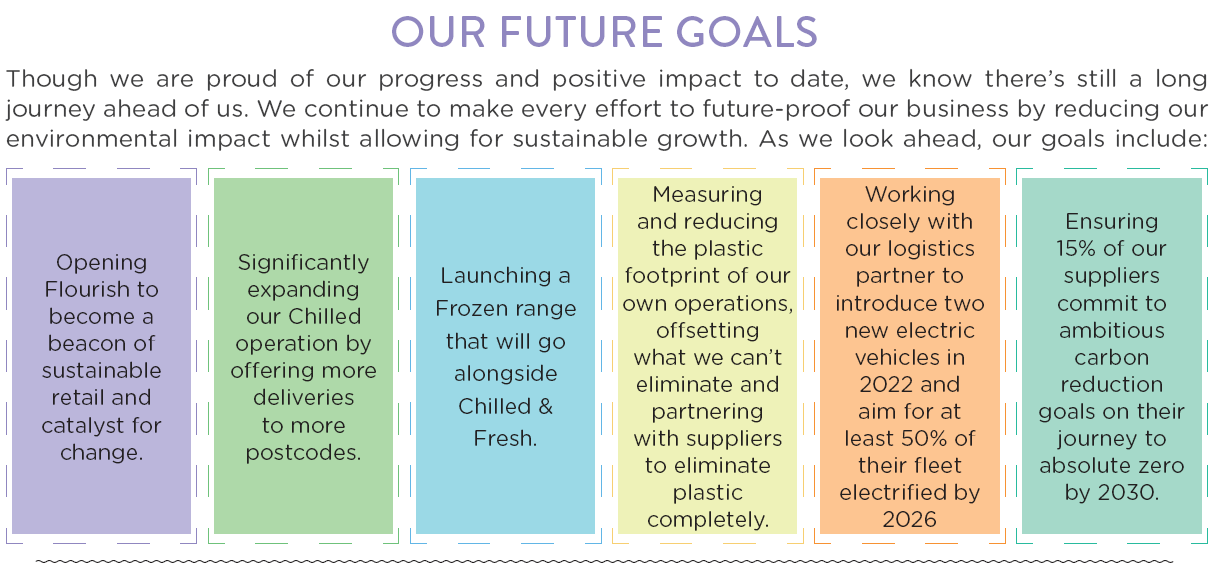
He founded Cotswold Fayre Ltd. in 1999, a speciality & fine food wholesaler supplying nearly 2,000 retail outlets throughout the UK. Last year alone he spent 200.000 pounds on social efforts that had no relation to creating revenue.
“We are doing a lot of things to improve our society, both environmentally by reducing carbon emissions and minimizing the use of plastic, but also on a social scale for example by “mandatory” volunteer work.”
For his and his colleague’s effort, Cotswold Fayre is now accredited as one of UK´s leading B-Corps. B Corp Certification is a designation that a business is meeting high standards of verified performance, accountability, and transparency on factors from employee benefits, charitable giving and high environmental standards to supply chain practices and input materials.
Compassionate leadership
Making an impact is also about how you treat other people. As a leader, you have a special responsibility towards your employees. This is something Paul Hargreaves values a lot.
“We have hired homeless people, former drug addicts and prisoners. Obviously when you treat people better, they stay with you for longer. For the past year, only two out of a hundred employees have left us.”
Paul believes there are a lot more to wanting a job somewhere, than just the salary.
“I believe that most people are good and want to make a positive impact on the world. We, as managers, need to make sure our employees have the best possible options to do just that. At meetings we always talk about people and planet before numbers. We have rearranged the agenda, and what we see, is people who get excited and people who speak wholeheartedly with passion. It really puts things into perspective:”
At the moment he is pushing for a new law to be passed in parliament. This will force corporations to change their constitutions, making their DNA´s about making a better planet.
Learn from others
Changing the world is not an easy task. No matter how much you desire to make an effort, you should always make decisions based on a well-researched foundation. As a member of a peer group at EGN, you can share knowledge, workshop and test your ideas with likeminded peers. Read more about your possibilities with EGN right here.
The post Why sustainability needs to be a purpose-driven journey appeared first on EGN Norge.
]]>EGN Norge
It is hard to stay competitive if you lose touch with your customers and other stakeholders. Rowan Jackson helps organizations create sustainable relationships by understanding what they expect. Any organization benefits from having good relations with their customers, and the key to understanding your customers and employees, is independent research into what they expect. Rowan…
The post Why customer and employee research may sustain your organization appeared first on EGN Norge.
]]>EGN Norge
It is hard to stay competitive if you lose touch with your customers and other stakeholders. Rowan Jackson helps organizations create sustainable relationships by understanding what they expect.
Any organization benefits from having good relations with their customers, and the key to understanding your customers and employees, is independent research into what they expect. Rowan Jackson is the founder of Promising Outcomes, a company of skilled research, strategy and leadership consultants.
“When working with organizations, we have discovered through our research that those who have neglected relationships with their stakeholders have a hard time keeping both customers and employees loyal. Not doing so has a cost, one that does not always appear on the Profit and Loss figures.”
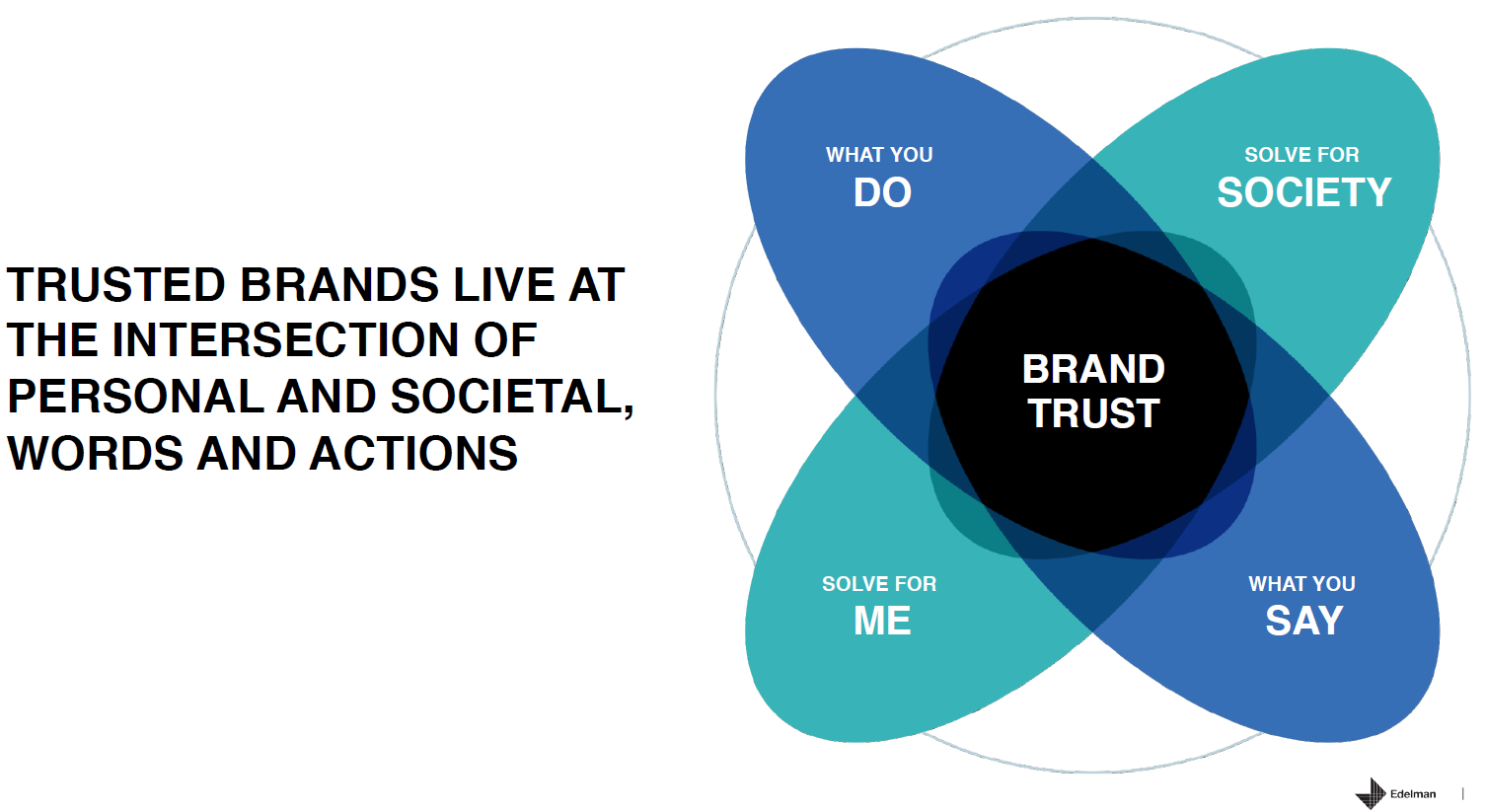
70 percent of organizations aren´t conducting regular research and are thereby risking losing touch with their customers. Rowan Jackson feels that number is way too high.
“Ideally, organizations benefit the most by doing both quantitative and qualitative research regularly. Times and trends are shifting rapidly these days and so are consumer expectations.”
Who is the messenger?
When assigned by an organization, Rowan Jackson and his team from Promising Outcomes conduct customer, employee and supplier research. They then present it to the leaders, helping them to understand these stakeholders’ expectations of the organization, what improvements these stakeholders expect and then agree an implementation plan for executing the improvements.
“Using insights from the data, we can guide our clients to take the appropriate action on those topics that matter to their key stakeholders, to address weaknesses and to improve overall performance. As we are all facilitators; we use workshops and structured follow-up actions to make sure the research converts into actual results.”
There is a big advantage in having external consultants conducting the research, as they will be completely objective and independent without any bias.
“Organizations exist only, in the world they work in, because of relationships. Understanding these relationships forms a bedrock for profitable advantage.”
Sustainability is key
Creating a sustainable organization depends very much on being able to attract new customers, but it is also about retention. Keeping existing customers is five times cheaper than attracting new ones. This customer and employee loyalty is an outcome of meeting their expectations. Measuring performance against expectations is critical for any organization. Rowan Jackson believes customer relations play a big part in organizations competitiveness and sustainability.
“Dynamic sustainability is about continuous improvement. It is not a static world, so organizations need to keep improving, or fall behind. This dynamic sustainability requires expectations-driven research into relationships with key stakeholders coupled with leadership. Today consumers’ expectations evolve constantly and what was acceptable performance two years ago is no longer so. Using such research, organizations invite their customers and employees to direct what and how they need to improve.”
As an example of shifting consumer expectations, Rowan Jackson mentions sustainability.
“What consumers expect today is different to what they expected ten or even two years ago. Today it is all about ESG. Consumers buy less from companies with bad environmental records. You are going to lose out, if you are not able to show an authentic approach to sustainability. Strategic research is therefore about expectations and not about satisfaction.”
From the Royal Marines
Rowan Jackson is strategist. He has 20 years of experience from the UK Royal Marines, where he developed skills, that are very much applicable to his job today.
“I used to write war plans, so I have an understanding of the importance of strategy and research.”
As it is in military operations, strategy is also important in business. However, it may feel overwhelming as a small organization to spend time and resources on research and strategy. Luckily, small businesses that do have an advantage.
“Small organizations are more agile than larger ones. They don’t have the same financial resources, but they are closer to and better at keeping in touch with their customers and other stakeholders. Smaller organizations also have less bureaucracy, which makes improvement implementation faster.”
If you are interested in joining one of EGNs networks, feel free to search for your perfect match here.
“You are known by the company you keep, and companies are known by the customers they keep.” – Rowan Jackson.
The post Why customer and employee research may sustain your organization appeared first on EGN Norge.
]]>EGN Norge
In the age of disruption. Leaders need to focus on opportunity recognition. Risk management systems help leaders to recognize weak signals, turn them into opportunities and to stay competitive in an increasingly sustainable world Journalist, Philip Nordentoft When Karen Wendt was hired by Deutsche Bank in 1992, it was in the department of business development…
The post Green swan? Leaders, work for sustainable implementation! appeared first on EGN Norge.
]]>EGN Norge
In the age of disruption. Leaders need to focus on opportunity recognition. Risk management systems help leaders to recognize weak signals, turn them into opportunities and to stay competitive in an increasingly sustainable world
Journalist, Philip Nordentoft
When Karen Wendt was hired by Deutsche Bank in 1992, it was in the department of business development and strategy, where she started looking into the future. The quest was to imagine markets in ten years time with questions like: How can we sustain our AAA rating in ten years from now? Now, she is a well known expert on environmental and social governance, sustainable finance, risk management, and integration of sustainability into business models.
Karen also advises on eco-systems approaches. She learnt from experience, that it is critical for any company to be implementing sustainability to stay ahead of the market, become not just resilient but antifragile, stay innovative and financially competitive. One quality of the leaders of today is to imagine how their industry will look like in ten years from now. Therefore leaders will have to anticipate the innovation, the flows of capital , the disruptions and technological and societal revolutions. This touches the core of decision making. What is required to make good decisions?
The risk management perspective
“From a risk management perspective we can say nowadays – risk managementin the old style is not enough: We need an extended toolbox. In the current world of volatility, uncertainty, complexity and ambiguity we need more tools, than the current risk management toolbox provides. We are living through a number of tipping points, be it the financial crisis, called black swan and the virus crisis, sometimes referred to as red swan. Now, perhaps we are heading towards a green swan scenario as the Bank for International Settlement in Basel calls the climate crisis.»
«All these events could have been predicted using leverage point analysis. This provides us with indicators showing us how close we are away to a tipping point. Looking at the data, it is obvious, that we have been reaching tipping point after tipping point. With the UN Sustainable Development Goals, the EU Action Plan and green and social taxonomies emerging all around the world, it is clear, that any company has to choose its path of transformation now. We might see winners and losers in the future, either businesses go down the bin, or having embraced sustainability. Successful businesses will create a financial return and a social outcome, solving a societal problem with market mechanisms.”
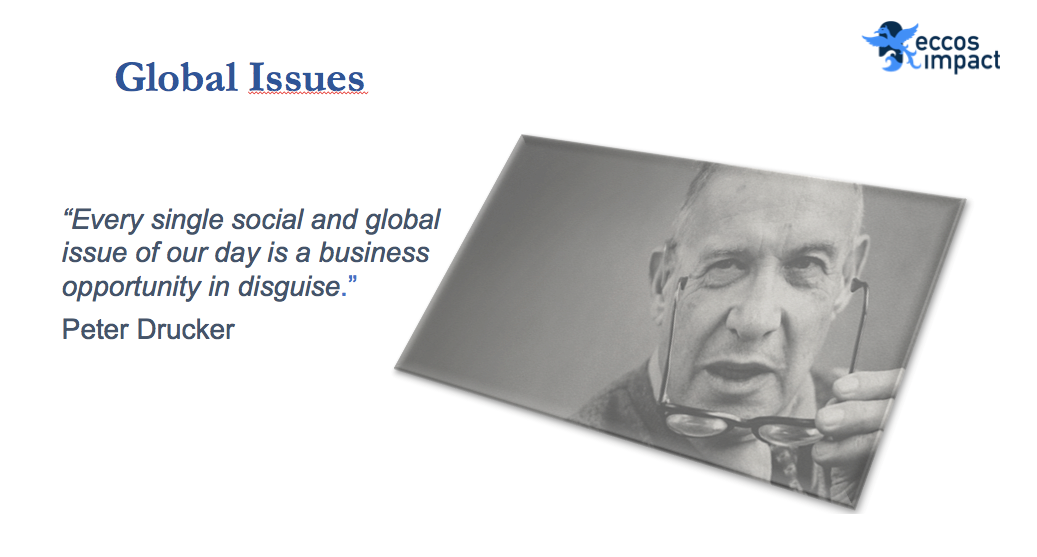
This requires us to look into societal developments and into the meaning of sustainability. We are living in the times of VUCA (volatility, uncertainty, complexity and ambiguity). With regard to sustainability we have changed from a problem solving perspective to a solution creation perspective. The UN Sustainable Development Goals define a target knowledge, where business needs to go. Now we have to create the transformation knowledge, all this in a VUCA world. There are more and more decisions to be made under uncertainty, where the Monte Carlo simulation and the mathematical formula is not enough to give us the required guidance.
Poor data quality
The problem is the quality of the data and the quality of the probability estimator. Making good decisions under uncertainty and ambiguity is much more difficult than under risk. And it requires an extended tool box. Under risk the silent assumption is, that the future will be like the past. Therefore we can feed our models with reliable data. Crunching ex-post event data from millions of people, insurance companies can estimate the likelihood of you being involved in a certain event. When we forecast, we also use risk modelling. However, the quality of the data depends on how many variables we have to estimate. And this is based on a very thin or unreliable database. This is particular true for situations that are unprecedented. Let us look into this extended toolbox, which is a good predictor of business opportunities. But also a weak signal for unprecedented scenarios and downsides.
The 10-year assessment for leaders
We are living in the age of disruption: Political disruption, financial disruption, technological disruption, institutional disruption, social disruption. To remain competitive in the future, businesses, small as well as large, must be aware of their 10-year vision. Leaders need to imagine how their market will look like ten years from now. The company therefore needs to know more than just Porters five forces and the competitive situation. It needs to go beyond that and include an in-depth analysis of various factors, political, environmental, social, technological and organisational (PESTO). Karen is going to talk you through some of these tools including the three lines of defense approach, the difference between impact and environmental and social governance and ecosystems approaches to shape the future. Stay innovative while becoming sustainable! Sustainability is the brother of innovation.
“A risk and impact analysis including a leverage point analysis can be made from a data-driven resource intense process. For small companies, it is an alternative to become part of an ecosystem taking an allocentric perspective on the future of the market”
The black swan, the red swan and the green swan
After the black and red swan we are now facing the green swan.
“We have to bring innovation when facing the green swan, and thus we need to become more allocentric in our business approach. The problems of today cannot be solved by one company alone, it needs an ecosystem.»
To prevent a green swan requires a shift in what truly shapes a business. Businesses will be even more competitor-oriented and have an increased focus on innovation. To be sustainable you need your business ecosystems to be willing and capable of solving societal issues using market mechanisms.
The three lines of defense
When it comes to risk management, Karen Wendt suggests to leaders the three lines of defense approach. The first line of defense is sales, the salesperson speaking to the client, the second line is quality management, risk management and operations. The third line of defense refers to compliance functions and internal audit. They provide comprehensive assurance based on the highest level of independence and objectivity within the organization. The first line of defense is the most important.
“When a challenge arises, like a drop in customer satisfaction, it is pivotal to do market research with each customer. The first line of defense shall then communicate upwards and to the other lines of defense. In a good risk management system the defense lines work together on creating better products and customer loyalty. The risk management system provides innovation indicators and is a system to stay agile and competitive on the market.»
If you are interested in joining one of EGNs networks, feel free to search for your perfect match here.
The post Green swan? Leaders, work for sustainable implementation! appeared first on EGN Norge.
]]>EGN Norge
EGN har store ambisjoner og er i en spennende fase. Vi ser vi etter en møtebooker til vårt salgsteam. For den rette kandidaten er dette en unik mulighet til å være med på en spennende fase i EGN Norges historie. Dette kan være starten på en karriere innen salg og ledelse. Det kan også være en…
The post Møtebooker appeared first on EGN Norge.
]]>EGN Norge
EGN har store ambisjoner og er i en spennende fase. Vi ser vi etter en møtebooker til vårt salgsteam.
For den rette kandidaten er dette en unik mulighet til å være med på en spennende fase i EGN Norges historie. Dette kan være starten på en karriere innen salg og ledelse. Det kan også være en trygg og god jobb for deg som liker å bruke telefon som arbeidsverktøy og snakke med ledere i norsk næringsliv.
Som møtebooker tar du den innledende kontakten på telefon med potensielle kandidater og er den første stemmen de møter. Ditt fokus og mål skal være å engasjere kandidaten til en utdypende dialog med den nettverksrådgiver du effektivt bokker møtet for. Du vil få ansvar for å finne og administrere potensielle kandidater til våre nettverksgrupper i tett samarbeid med våre nettverksrådgivere.
Det er viktig at du er uredd, vant til å bruke telefonen som arbeidsverktøy og har et høyt aktivitetsnivå. Du er resultatorientert, har høye mål om å lykkes og er en selvgående trygg lagspiller.
Jobben kan passe godt for deg som vil lære mer om norsk næringsliv, og ser etter en aktiv trygg jobb, eller deg som trenger en spennende jobb for en kortere periode eller står mellom skole og utdanning.
Vår grunntanke er å gjøre hverandre bedre – hver dag. Ønsker du å lykkes og samtidig bidra til at ledere i norsk næringsliv gjør hverandre bedre?
Da er du kanskje vår nye møtebooker?
Dine arbeidsoppgaver
- Møtebooking via telefon.
- Samhandling med nettverksrådgiver og resten av EGN teamet.
- Finne potensielle prospekter og hente relevant kontaktinformasjon via web/sentralbord.
- Registrere og vedlikeholde leads i vårt CRM system
Vi tilbyr
- Gode kolleger i et aktivt, fremoverlent miljø.
- Meningsfylt og verdiskapende arbeid som tar Norge videre.
- Bredt kontaktnett – rask forretningsforståelse og innsikt i norsk næringsliv.
- Muligheten til å lære og være med på å forandre markedet for læring og utvikling.
Kvalifikasjoner og personlige egenskaper
- Trives med verdiene hjelpsom, respektfull og profesjonell.
- Interessert av norsk næringsliv.
- Har stor arbeidskapasitet, er resultatorientert og ydmyk.
- Liker å ta kontakt og snakke i telefon.
- Strukturert, kvalitetsbevisst og klarer å holde orden på mange detaljer.
- Gode norskkunnskaper og fremstillingsevne, skriftlig og muntlig.
- Gode dataegenskaper og tar i bruk digitale verktøy raskt og effektivt.
- Bidrar aktivt til et godt arbeidsmiljø.
Kjenner du igjen deg i dette?
Da vil vi gjerne at du tar kontakt med oss!
Søk nå
Send søknad og CV til Mette Flansmose
e-post: mfl@egn.com
Arbeidssted: Oslo
Stillingsprosent: Heltid
Søknadsfrist og oppstart: Snarest
Om EGN
EGN er et uavhengig, profesjonelt nettverk for bedriftsledere. EGN er en del av det internasjonale nettverket Executives´ Global Network (EGN), og har +15.000 medlemmer i 16 land. EGN er dermed det eneste nettverket som tilbyr kunnskapsdeling på tvers av fagområder, bransjer, ledernivåer og landegrenser. EGN Norge har vært gasellebedrift 4 år på rad, senest i oktober 2017. Nå er vi en spennende fase som skal ta EGN Norge til neste nivå.
The post Møtebooker appeared first on EGN Norge.
]]>